
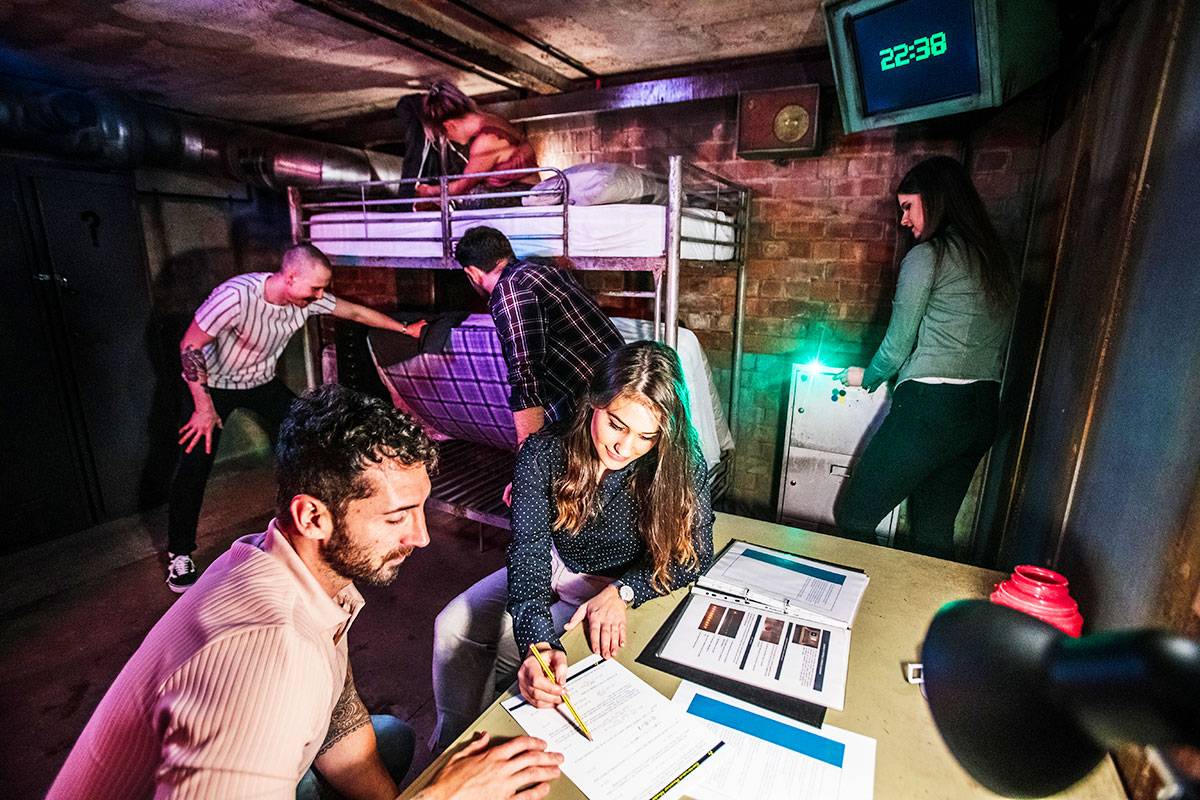
In the modern corporate world, the traditional team-building retreat—often characterized by passive trust falls or dull seminars—is rapidly losing its appeal. Today’s dynamic workplace demands active engagement, critical thinking, and authentic collaboration. Among the most popular and effective alternatives to standard corporate outings is the immersive escape room challenge. By placing colleagues in a high-stakes, time-sensitive environment where success relies entirely on joint effort, an escape room serves as a powerful catalyst for team cohesion and improved interpersonal dynamics.
Breaking Down Hierarchies and Fostering Equality
In a conventional office setting, communication and decision-making often follow strict hierarchical channels. Executives and managers give directions, while junior employees execute tasks. However, entering an escape room instantly reshapes this dynamic by placing everyone on equal footing from the moment the door locks.
Flattening the Organizational Structure
Inside an escape room, job titles and company rankings lose their relevance. A complex cipher or hidden mechanical puzzle does not care whether a participant is a senior director or an intern. The environment demands immediate problem-solving skills, keen observation, and unique perspectives. This equalization allows junior team members to speak up, share creative ideas, and even lead specific tasks without feeling intimidated by leadership.
Discovering Hidden Talents
Every escape room features a variety of challenges, ranging from spatial puzzles and numerical codes to lateral thinking riddles and physical manipulation. Consequently, employees often reveal strengths that remain hidden in their day-to-day office routines. A quiet accountant might excel at uncovering hidden structural clues, while an introverted developer might spot subtle patterns in a sequence. Recognizing these varied skill sets builds mutual respect among colleagues, proving that every team member brings something valuable to the table.
Enhancing Real-Time Communication and Active Listening
Effective communication is the cornerstone of any successful organization, yet office communication can easily suffer from misinterpretation, delayed replies, or isolated silos. An escape room forces rapid, transparent, and precise verbal exchange.
The Necessity of Open Dialogue
Time is the ultimate constraint in an escape room. Teams typically have sixty minutes to unravel a narrative, decipher clues, and unlock the final door. Because every second counts, holding onto information or working in isolation actively hurts the entire group’s progress. Participants are forced to call out their discoveries, articulate their logic clearly, and explain what they are attempting to solve. This fast-paced environment conditions participants to share information immediately and concisely.
Practicing Active Listening
Finding a clue is only half the battle; interpreting it requires input from others. When multiple team members hold different pieces of a single puzzle, they must actively listen to one another to connect the dots. An escape room reinforces the habit of paying close attention to colleagues’ ideas, validating diverse viewpoints, and synthesizing different perspectives to achieve a common objective.
Strengthening Problem-Solving and Strategic Thinking Under Pressure
Workplace stress and tight deadlines test a team’s durability. An escape room simulates high-pressure environments in a controlled, fun, and safe setting, allowing teams to practice strategic thinking when time is ticking away.
Collaborative Brainstorming Under Time Constraints
When a team hits a roadblock in an escape room, frustration can quickly build. Success requires remaining calm, assessing available evidence, and brainstorming alternative angles. This trial-and-error process helps teams develop collective resilience. They learn to discard failed strategies without pointing fingers, pivot quickly toward new hypotheses, and support one another when a solution proves elusive.
Resource Management and Delegation
An escape room contains dozens of items, symbols, and prospective leads. Successful teams quickly learn that dividing labor is crucial. One subgroup might analyze a series of locked boxes, while another deciphers a wall map. Delegating responsibilities based on individual strengths and trust ensures that time is used efficiently. This practical lesson in task delegation directly translates to managing complex workplace projects.
Building Trust and Psychological Safety
For teams to collaborate effectively in the workplace, team members need to feel psychologically safe—confident that they can take risks, offer creative solutions, and make mistakes without fear of ridicule or negative consequences.
Shared Vulnerability and Risk-Taking
An escape room presents unfamiliar challenges that require participants to think outside the box. Because the answers are not always obvious, team members must feel comfortable pitching unorthodox ideas or trying unconventional methods. When a team embraces an unconventional idea that ultimately unlocks a door, trust deepens. Even when an idea fails, the collective nature of the game ensures that failure is viewed as a shared learning experience rather than an individual mistake.
Celebrating Shared Victories
Nothing bonds a group faster than a shared sense of accomplishment. Escalating tension followed by a sudden breakthrough creates a natural emotional high. Whether the team escapes with seconds to spare or misses the mark by a single lock, the shared journey creates lasting memories. Celebrating small wins throughout the game—like cracking a tough padlock or finding a hidden key—builds positive reinforcement and camaraderie that persists long after the event ends.
Transforming Office Culture Beyond the Game
The primary benefit of choosing an escape room for team development is the long-term impact on daily workplace interactions. The lessons learned during an hour of gameplay transfer seamlessly back to the office environment.
Translating Game Dynamics to Workplace Synergy
After completing an escape room session, teams carry a renewed understanding of each other’s communication styles, strengths, and problem-solving habits. Colleagues who once interacted solely through professional emails now share a memorable baseline experience. This enhanced rapport breaks down departmental silos, encourages cross-functional collaboration, and creates a more relaxed, approachable workplace atmosphere.
Debriefing and Continuous Improvement
Many organizations use the post-game debrief to reflect on their experience. Discussing what strategies worked, how communication flowed, and how conflicts were handled provides actionable insights into the team’s operational habits. Identifying these behavioral patterns in a lighthearted setting allows teams to adjust their real-world collaboration strategies constructively.
Conclusion
An escape room is far more than a fun weekend activity or a trendy entertainment option; it is an interactive laboratory for human collaboration. By stepping into an environment where time is limited, communication is paramount, and hierarchy is stripped away, colleagues learn to rely on one another in novel ways. The shared triumphs, creative problem-solving, and adrenaline-fueled teamwork experienced inside an escape room create genuine connections that bring teams closer together and strengthen their performance in the professional realm.